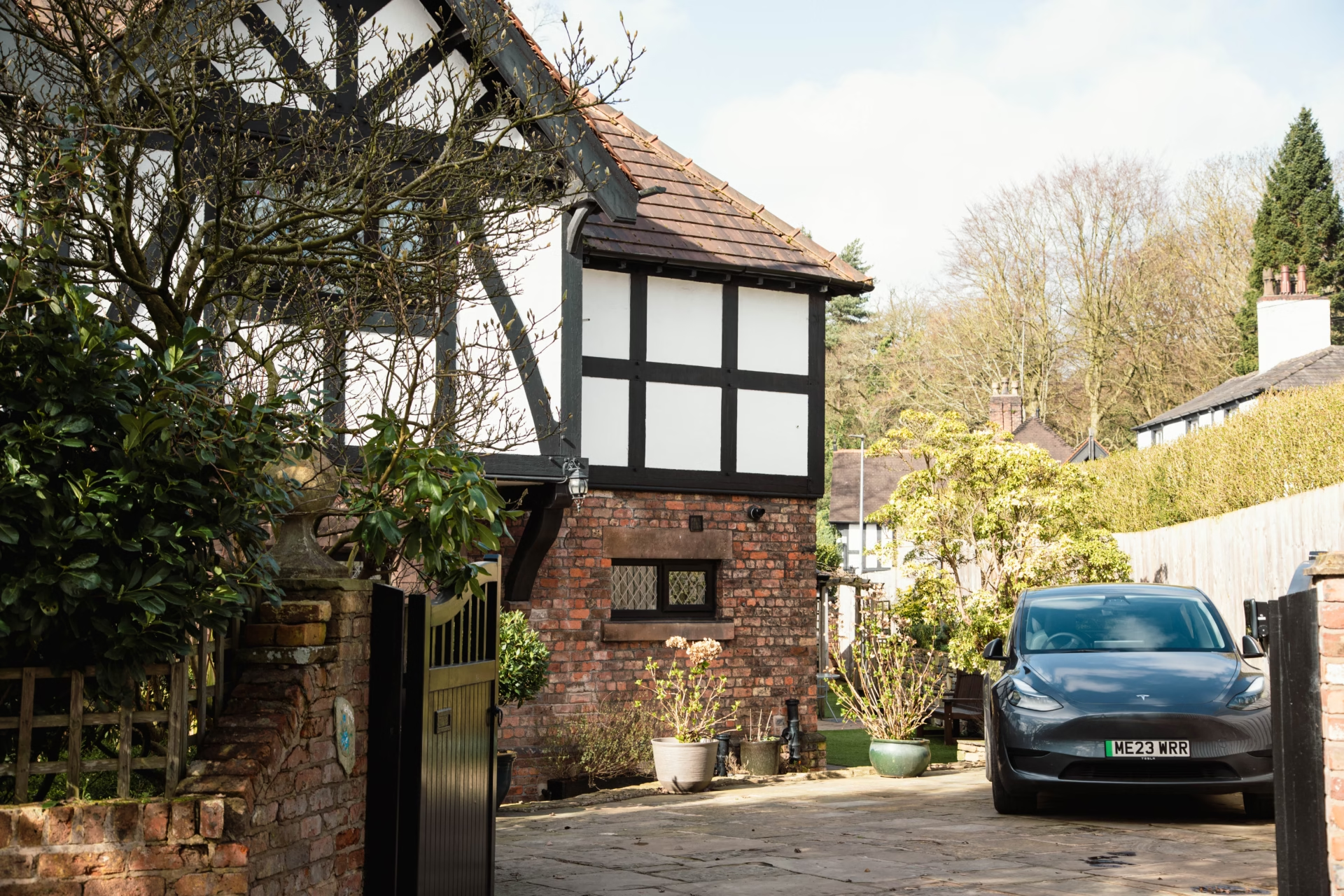
For years, the narrative’s been pretty fixed.
You rent until you can buy. You buy as soon as you can. End of story.
But that thinking feels a bit out of date now.
The reality is, the decision between buying and renting isn’t just financial anymore — it’s tied up in how people want to live, how mobile they want to be, and how they think about risk, commitment, and opportunity.
And once you start looking at it like that, it becomes a much more interesting conversation.

The Case for Buying (because it still matters)
Let’s be clear — buying still has real advantages.
You’re building equity over time instead of paying someone else’s mortgage. You’ve got control over your space. You’re protected (to a degree) from rising rents. And there’s a long-term security that comes with owning something outright.
For a lot of people, especially those thinking long-term or putting down roots, that still makes complete sense.
There’s also the psychological side — owning a home still carries weight. It feels like progress, stability, something solid to point to.
But that’s only one version of what “progress” looks like now.
Renting Has Quietly Changed
What’s happened over the last decade is that renting has evolved — both in perception and in reality.
It’s no longer just a short-term stopgap for people “on their way” to ownership.
For a growing group, it’s a conscious decision.
Partly because of affordability, yes — but also because lifestyles have changed. Careers are less linear, people move cities more often, remote working has opened up new options, and priorities aren’t as fixed as they used to be.
Owning a property ties you to one place, one market, one long-term plan.
Renting keeps things open.
Flexibility Isn’t Just a Buzzword — It Has Real Value
This is probably the biggest shift.
When you rent, you’re not locked in.
If a new job comes up in another city, you can go.
If you want to upgrade your living situation, you can.
If your circumstances change — good or bad — you’ve got options.
Compare that to owning, where every decision comes with friction:
selling costs, timelines, market conditions, tax considerations.
Flexibility isn’t just “nice to have” — for a lot of people, it’s worth paying for.
And in uncertain markets or fast-moving careers, that optionality can be more valuable than the equity you might be building.
The Lifestyle Trade-Off Is Real
There’s also a day-to-day angle that often gets overlooked.
A lot of renters are choosing location and lifestyle over ownership.
They’re living in areas they might not be able to buy in.
Closer to work, closer to social life, closer to what they actually enjoy doing.
They’re not dealing with unexpected maintenance bills, service issues, or the time that comes with managing a property.
They can upgrade, downgrade, or relocate without a major life event attached to it.
In a lot of cases, renting allows people to align their home with their current lifestyle — not a long-term commitment they made years ago.
And for many, that’s a better fit.
Financially, It’s Not As Simple As “Rent Is Dead Money”
That phrase gets thrown around a lot, but it ignores a few things.
Buying ties up a significant amount of capital upfront — deposits, stamp duty, fees — and then ongoing costs like maintenance, repairs, and sometimes service charges.
It also concentrates risk into a single asset, in a single location.
Renting, on the other hand, keeps capital accessible.
Some people are choosing to invest that money elsewhere — into businesses, markets, or other opportunities that offer different types of return or liquidity.
Others simply value having a financial buffer and lower exposure.
That doesn’t make renting “better” — but it does make it a valid strategy depending on the individual.
What This Means for Investors
This shift in behaviour is where it gets interesting.
If renting is becoming more of a lifestyle choice — not just a necessity — then the expectations around rental property change.
Tenants aren’t just looking for somewhere to stay.
They’re looking for somewhere that fits how they live.
That means:
- Good locations (not just “affordable” ones)
- Well-presented, well-designed units
- Reliable, professional management
- A smooth, low-friction experience
In other words, the rental market is moving away from “functional” and towards “service-led.”
And that raises the bar.
Investors who recognise that — and treat their product accordingly — are the ones more likely to see consistent demand, stronger tenants, and better long-term performance.
The Reality Is — It’s Not Either/Or
The most important thing is this:
Buying and renting aren’t opposites. They’re tools.
For some people, at certain stages of life, buying makes complete sense.
For others, renting is the better option — not just financially, but practically and emotionally.
And increasingly, people move between the two depending on what they need at the time.
The Bottom Line
Buying still represents stability, long-term thinking, and ownership.
But renting now represents flexibility, lifestyle, and choice.
And that shift matters.
Because the more renting becomes a deliberate decision, the more the quality of rental property — and the experience around it — becomes important.
It’s no longer just about providing a roof over someone’s head.
It’s about delivering a way of living that people actively choose.